
Greek quince paste, or Kydonopasto, is a traditional Greek sweet made with just two main ingredients: quince and sugar. It is a beautiful, jewel-like confection with a deep amber color, a naturally sweet flavor, and a firm, jelly-like texture.
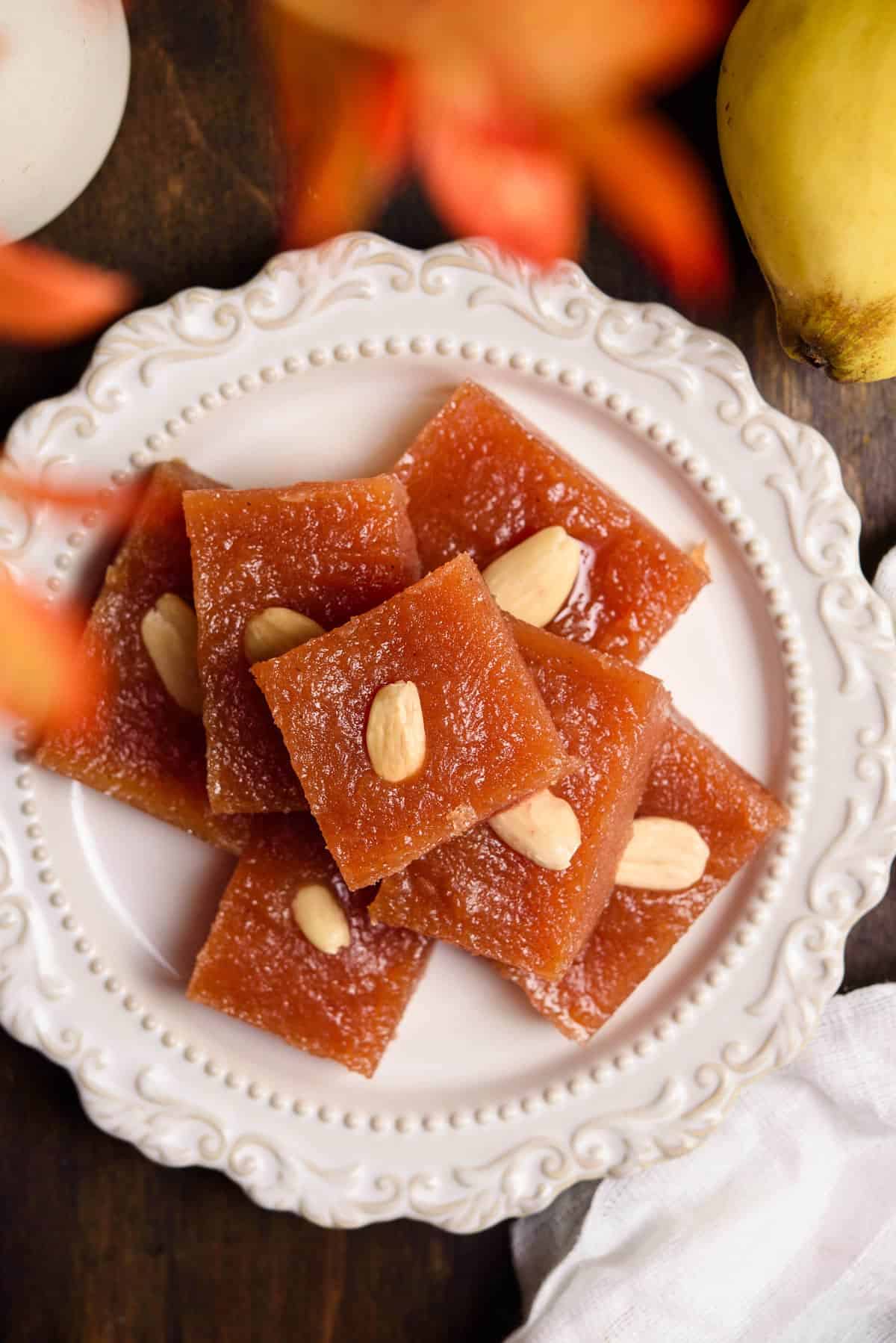
Think of it as a cross between fruit jelly and soft candy. Its Spanish name is Membrillo. Many people also call it quince cheese because of its firm texture (nothing savory whatsoever). It holds its shape when sliced but is still tender enough to bite into.
Table Of Contents
This old-fashioned Greek quince candy is simple to make and a lovely way to preserve the autumn quince harvest.
What Does Quince Paste Taste Like?
Quince has a unique fragrance. Its flavor is gently floral, fruity, and slightly tart, with hints of apple and pear. When cooked with sugar, it develops a rich, honey-like sweetness and a beautiful warm color.
The sweetness of Kydonopasto depends partly on the ripeness of the fruit. Riper quinces tend to be sweeter, while less ripe ones have a sharper, more tangy flavor.
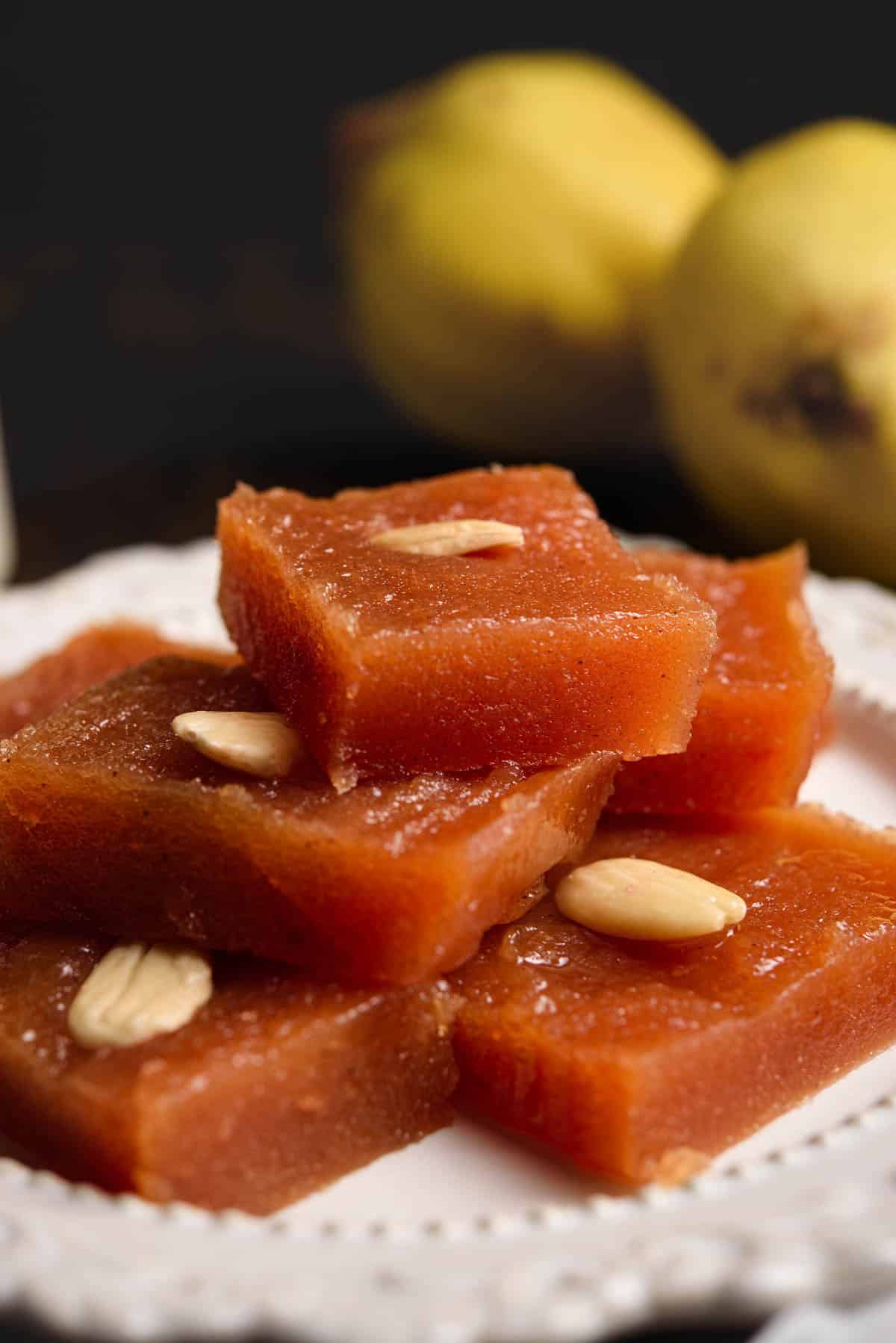
The finished quince paste is firm, but not as hard as ordinary candy. It has a smooth, dense texture that makes it perfect for cutting into little squares or diamond-shaped pieces.
The Secret to Firm Quince Paste
One of the natural advantages of quince is its high pectin content. Pectin helps fruit jams thicken and set.
Although we use only the peeled quince flesh for the paste, you can also use the skins for extra pectin. Place them, along with the seeds, inside a piece of cheesecloth (a fine, loosely woven cotton cloth). Tie it securely and add it to the pot while the quince cooks.
The skins, cores, and seeds release extra pectin into the cooking liquid, helping the paste achieve an extra-firm texture.
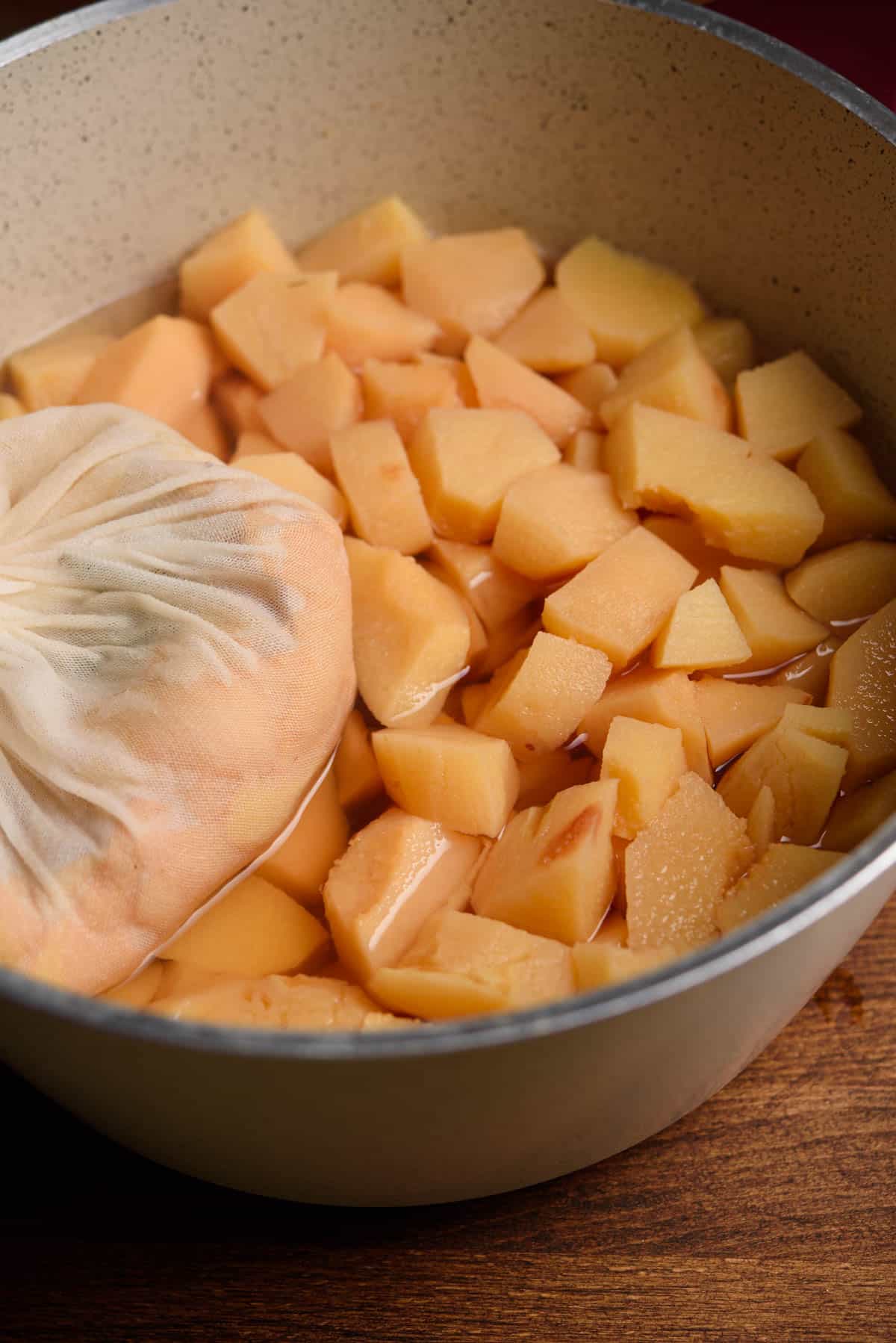
Another little bonus? The fragrant cooking liquid doesn’t have to go to waste. Strain and save it to make homemade quince jelly, or use it to add natural pectin to jams, marmalades, and fruit sauces.
Preparing Quince
Peel the quince fruit using a sturdy peeler because quince can be a bit tough. And as I mentioned above, you can use the skins and seeds to add some extra natural pectin to the paste. Simply tie them in a fine mesh cloth or cheesecloth and cook them together with the quince flesh.
Next, cut the skinned quince in half lengthwise, then cut each half into 2 or 3 pieces, depending on size. When working with smaller pieces, you can more easily remove the hard center containing the seeds. You can use a knife or a spoon to do this.
Quince fruit, like apples, darkens when peeled. To prevent this oxidation, soak the skinned flesh in lemon water. Squeeze 1 lemon per 2 liters of water.
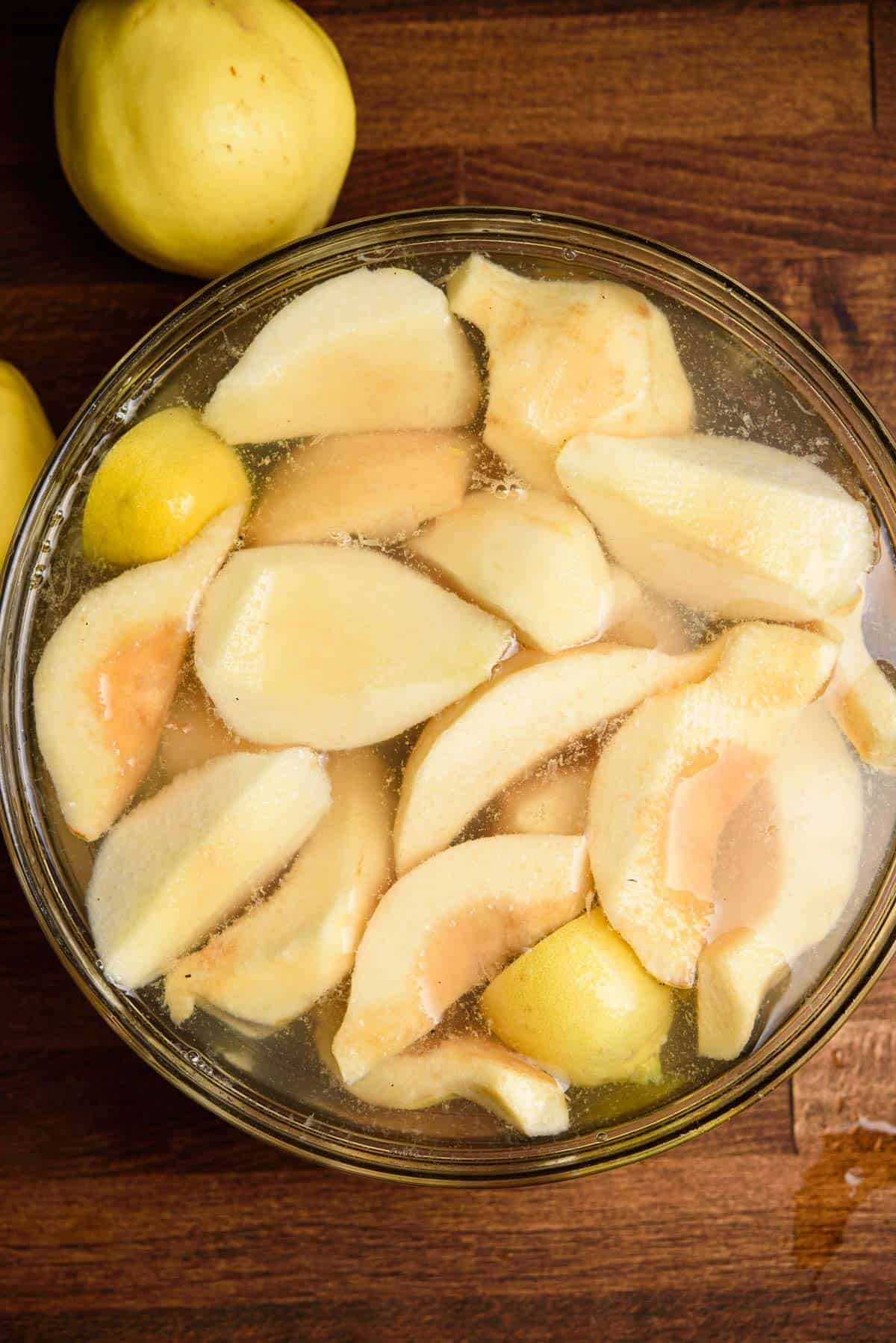
You can also rub a piece of lemon directly on the flesh. However, even if it gets some color, it won't affect the final result.
Adding Flavors
Traditionally in Greece, Kydonopasto is flavored with lemon geranium and cinnamon. Lemon geranium is also used when making Quince Spoon Sweet (as we call it in Greece).
If you don't have lemon geranium, that's perfectly fine. Cinnamon adds plenty of flavor on its own. And if you're planning to serve it with cheese and savory spreads, then you can skip the flavorings altogether.
Another delicious addition is grape molasses. It adds color and a delicious fruity grape flavor that enhances the flavor of quince beautifully!
How to Know When Quince Paste Is Ready
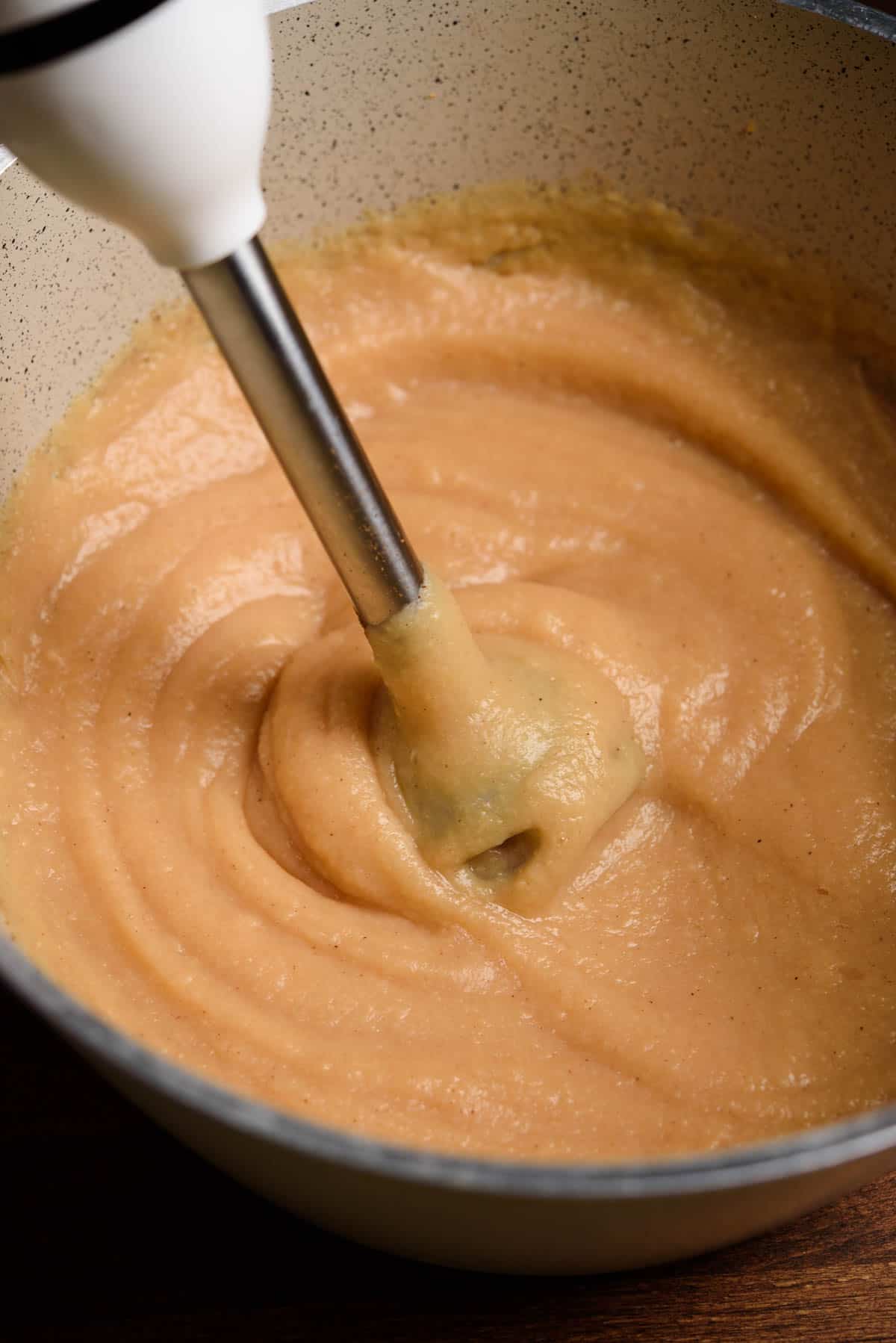
After poaching the quince until tender, drain it and blend the flesh into a smooth purée using an immersion blender. Add the sugar and cook slowly, stirring often, until the mixture becomes very thick and sticky.
There are a few ways to check if it is ready:
- The wooden spoon test: When you pull the spoon through the mixture, the thick paste should come together and move almost as one piece.
- The cold plate test: Place a small teaspoon of paste on a cold plate. Let it cool briefly and check how firmly it sets.
- The temperature test: Use a kitchen thermometer to ensure it has reached the right temperature. After 210°C / 410°F, it's ready. The more it rises from there, the thicker and firmer it will become.
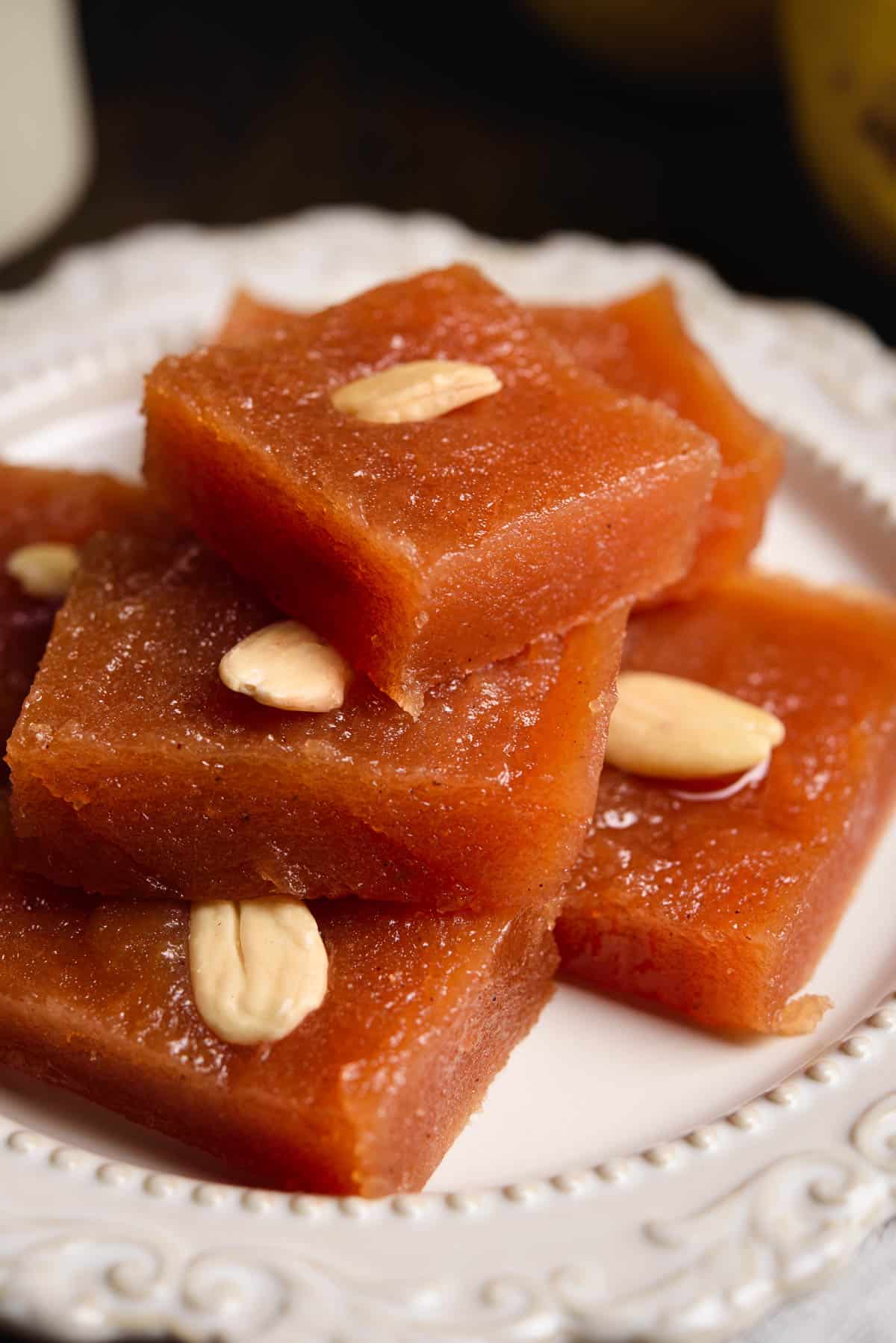
Once ready, spread the paste evenly into a shallow pan.
How to Dry and Set Quince Candy
Traditionally, quince paste was spread in trays and left to air-dry, sometimes in the autumn sunshine. A fine mesh cloth or cheesecloth was placed over the trays to protect the sweet from flies and wasps.
For a quicker method, you can dry it in the oven at around 100°C (212°F). Keep it there until it reaches your preferred firmness.
I prefer a simpler approach. I let my quince paste set overnight in the pan, without additional drying. It becomes firm enough to slice while keeping a lovely, tender bite.
How to Serve Greek Kydonopasto
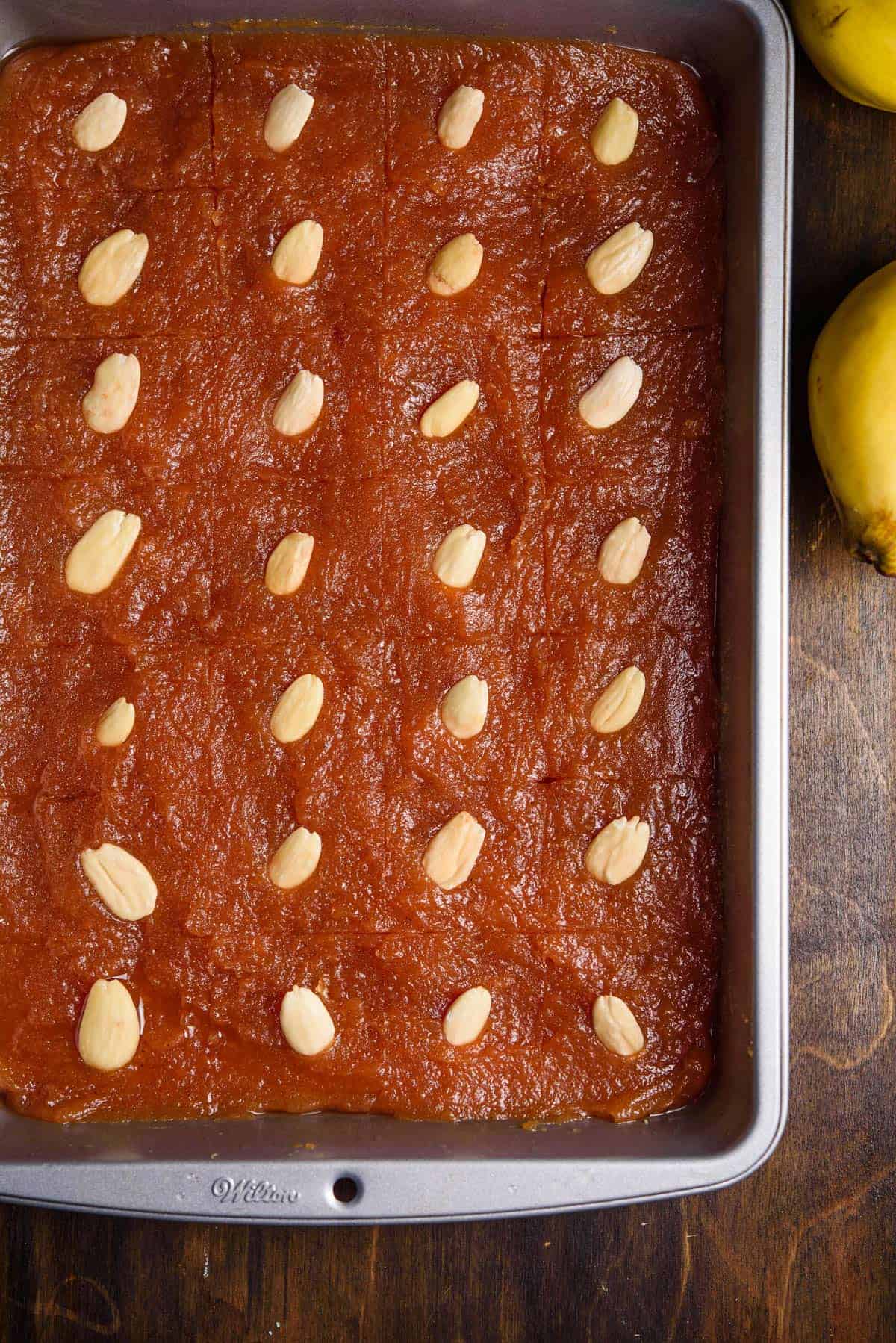
Once set, cut the quince paste into small squares or diamond-shaped pieces.
Press a toasted, blanched almond into the center of each piece (while it's still warm) for a beautiful traditional decoration.
You can also try:
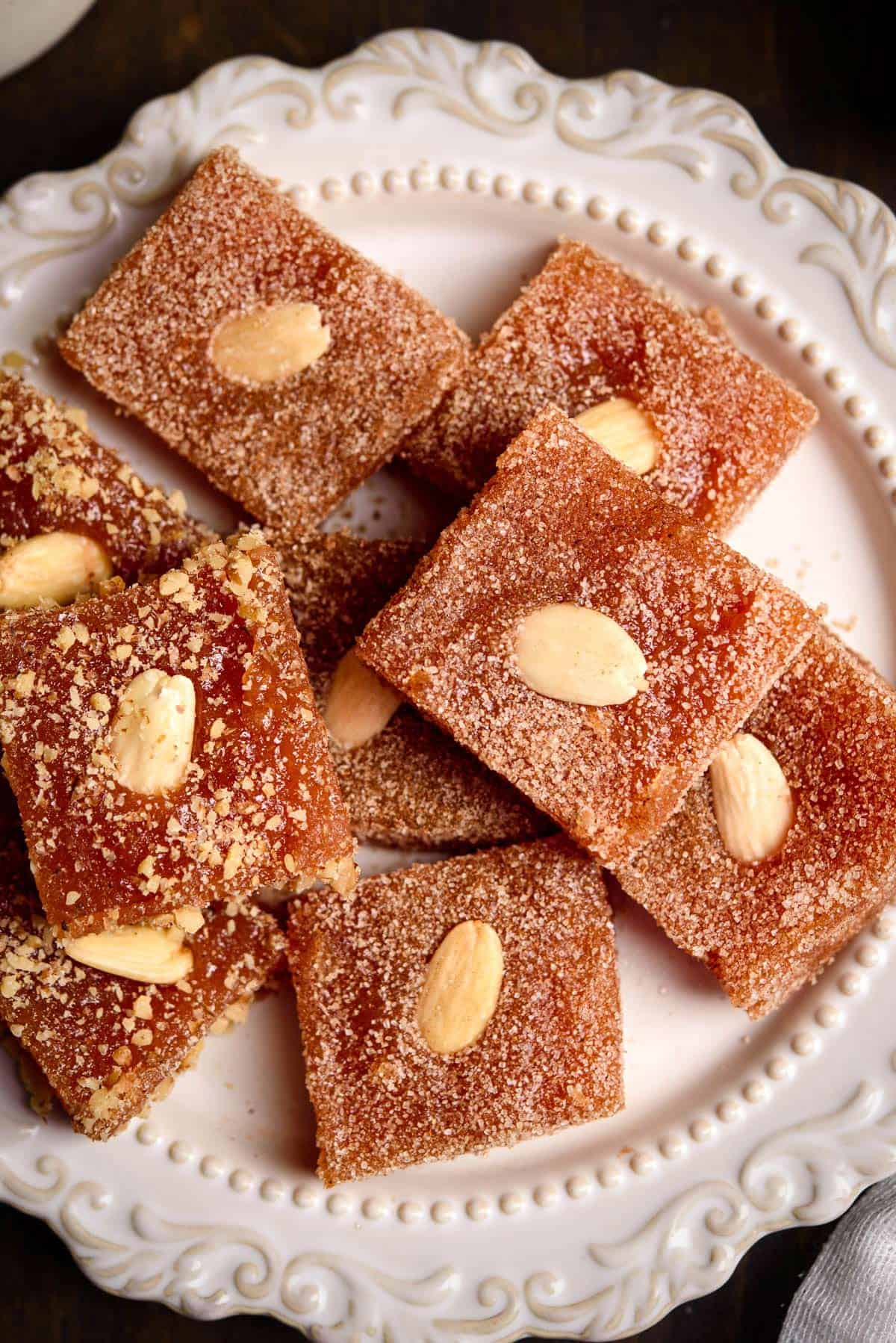
- Rolling the pieces in cinnamon sugar.
- Coating them with finely ground almonds or walnuts.
- Serving them alongside aged cheeses, especially sharp or salty varieties.
- Adding them to a cheese board with crackers and nuts.
- Enjoying a small piece with Greek coffee or afternoon tea.
- Greek quince paste also makes a lovely homemade edible gift. Arrange the pieces in small paper cases and place them in a decorative box.
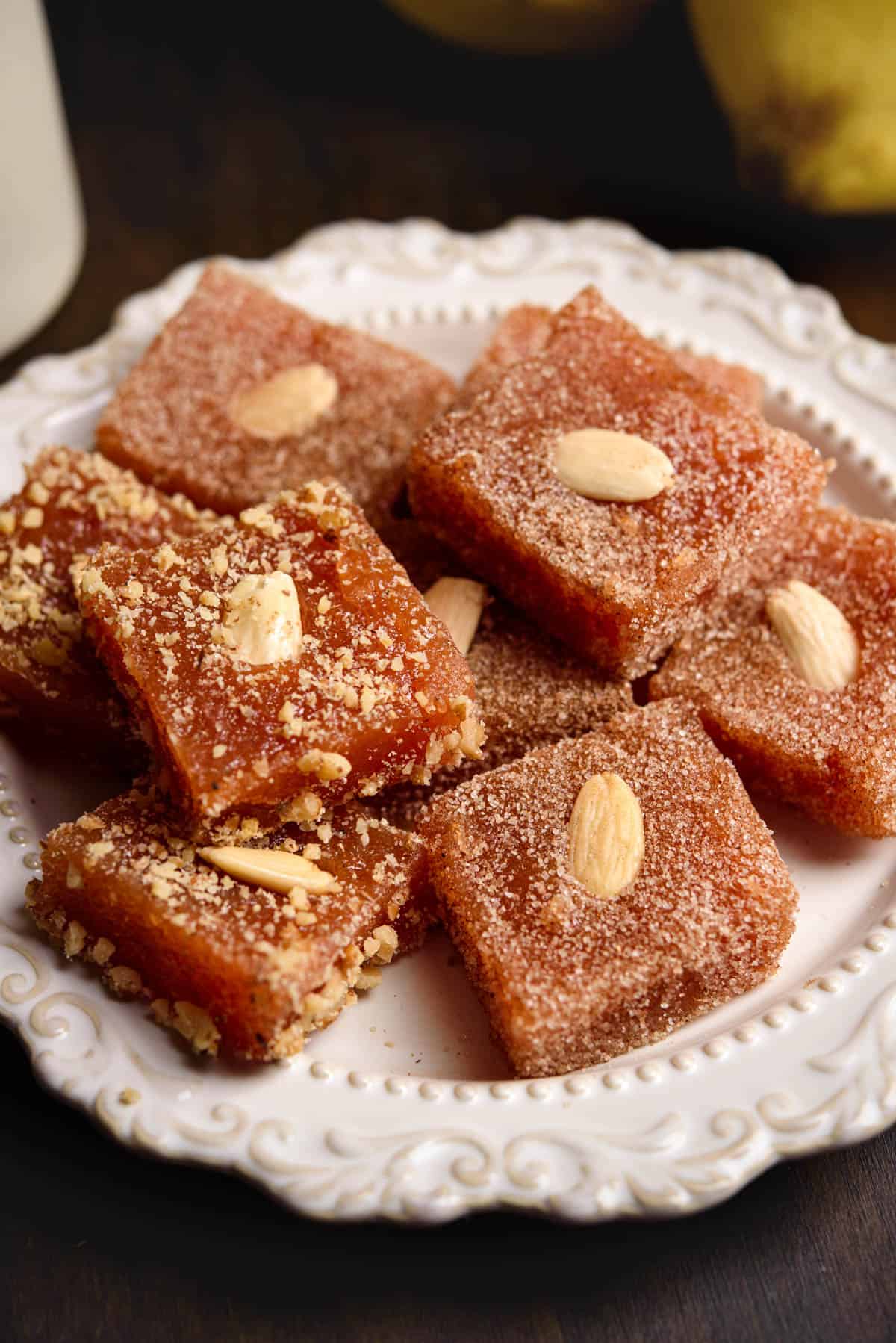
Whether served with cheese, coffee, or simply enjoyed on its own, kydonopasto is a wonderful taste of Greek autumn. With its fragrant flavor, beautiful color, and simple ingredients, this traditional quince candy is well worth making at home.
Recipe
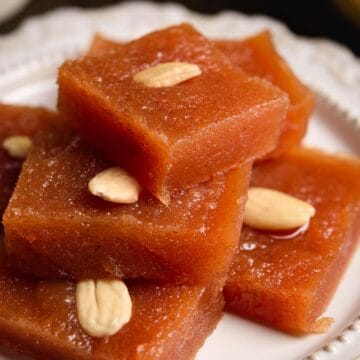
Quince Paste (Kydonopasto)
Ingredients
- 1.5 kg (3.3 pounds) quince flesh rinsed, peeled and scooped
- 1 kg (2.2 pounds) sugar
- 1 cinnamon stick
- 1 liter (4 cups) water
- olive oil
OPTIONAL:
- 3 tablespoons grape or pomegranate molasses
- 1 sprig lemon geranium
- blanched almonds
- ground almonds
- cinnamon sugar (1 teaspoon ground cinnamon mixed with 4 tablespoons sugar)
Instructions
- For instructions on how to prepare quince, please see the text above.
- Cut quince into 3 cm pieces and place in a cooking pot along with the 4 cups of water, the cinnamon stick, and lemon geranium if using.
- Simmer covered over moderate heat until the fruit feels soft and tender when you run a knife through it.
- Drain the water from the pot (you can use it in jellies and jams). Remove the cinnamon stick and lemon geranium.
- Pulse the quince with an immersion blender. Or use a high-speed blender.
- Add the sugar to the cooking pot with the cooked quince. Add also the grape or pomegranate molasses, if using.
- Cook, stirring with a wooden spoon over medium to medium-low heat for about an hour. It takes time to thicken and turn into a paste. The temperature should read 210°C / 410°F for a candied, jelly-like texture. The longer you cook from there, the harder and more candy-like it will become. Test by adding a small drop with a teaspoon onto a cool plate so you can see how firm it becomes as it cools.
- Brush a 9 x 13-inch (23 x 33 cm) pan with olive oil. Transfer the quince paste and smooth it with a spoon.
- Cut and divide into pieces. Press a blanched almond in the middle for decoration (optional).
- Cool the quince paste for a couple of hours at room temperature until set and firm. Don't cover the pan, let it air-dry. If it's not as firm as desired, you can bake it at 100°C / 210°F until firm.
- Once cooled, you can decorate it with ground almonds or cinnamon sugar. Take each piece and roll it into the desired coating.
Leave a Reply