
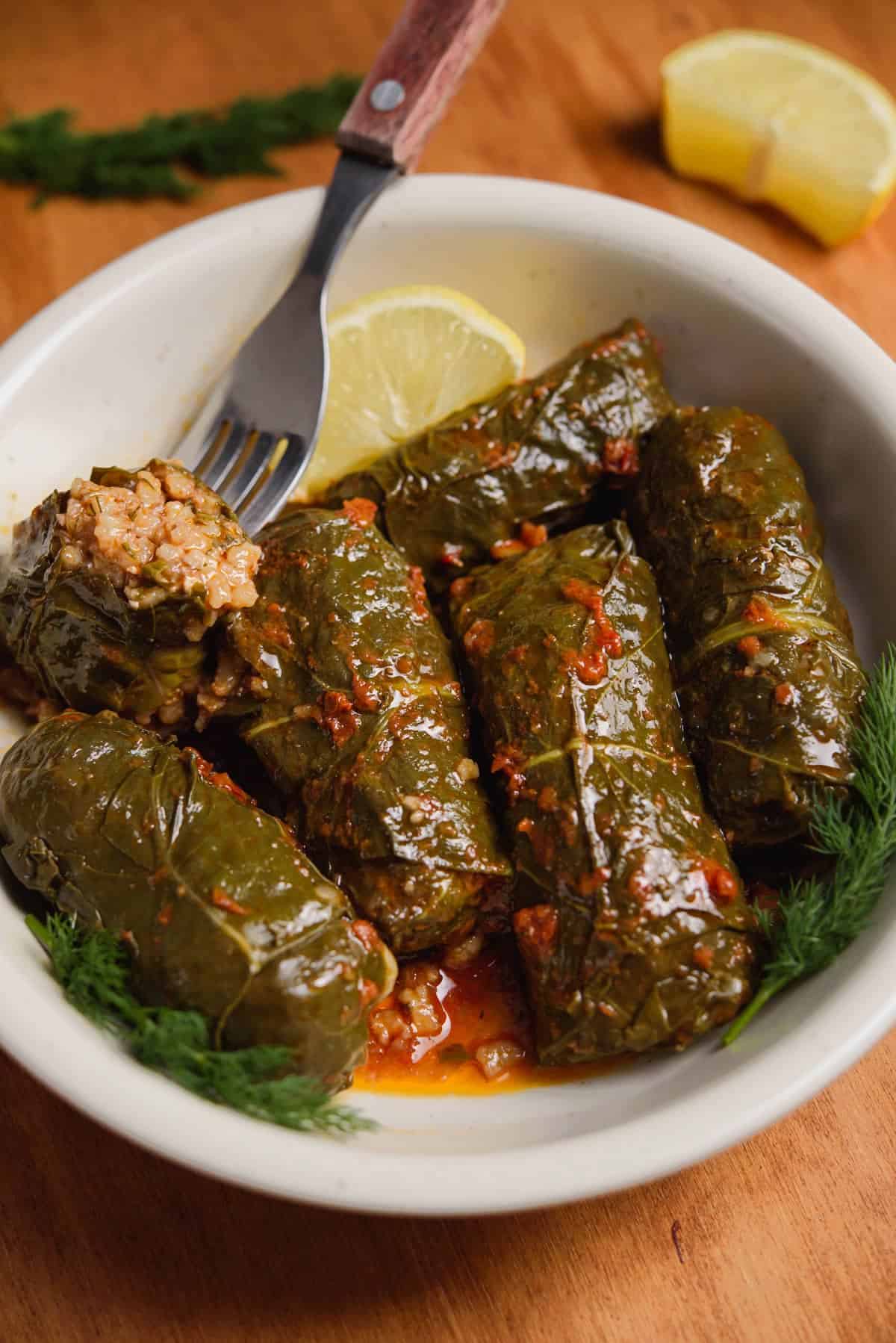
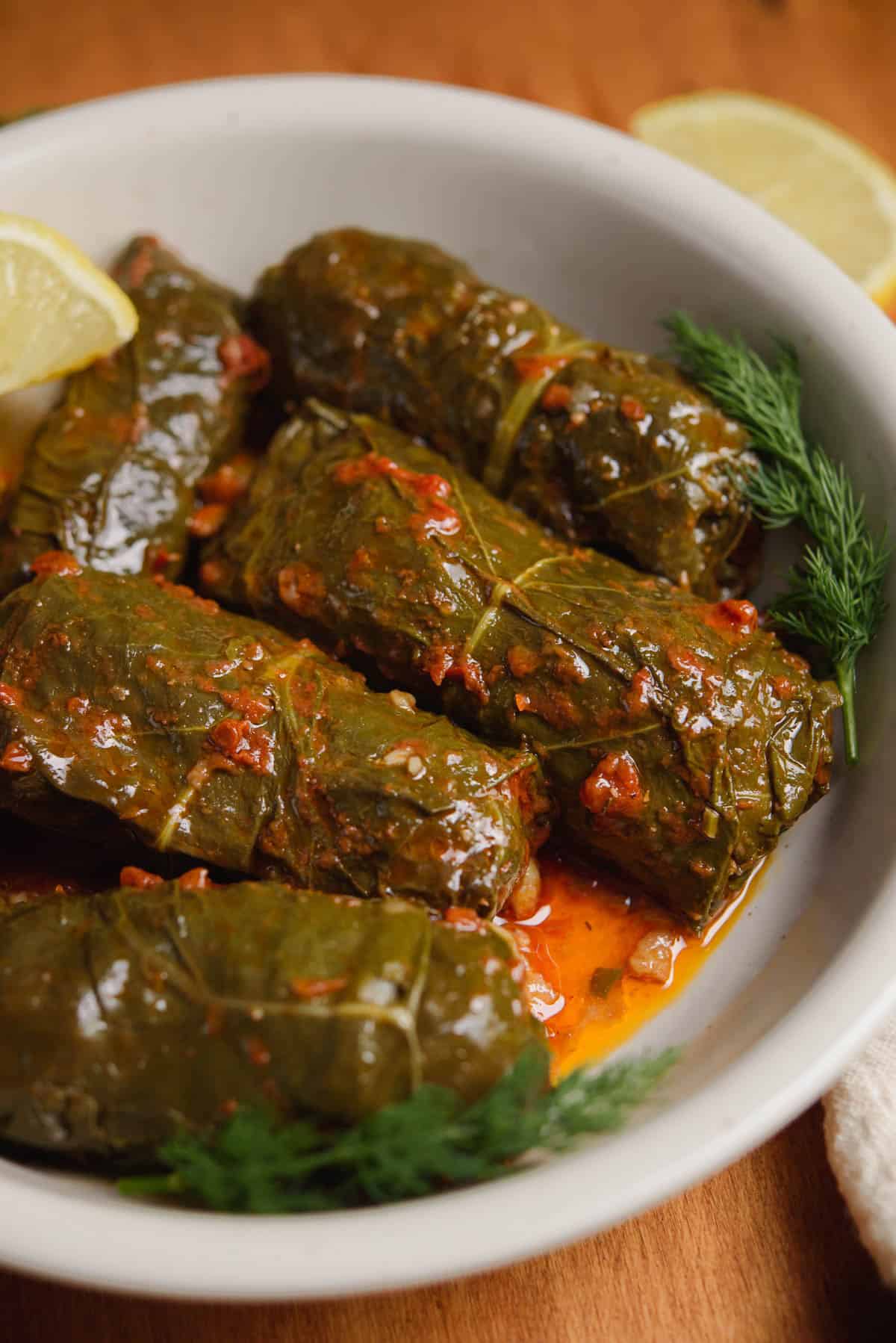
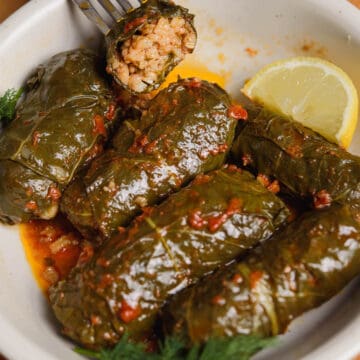
Soft Chard Rolls stuffed with herby rice, walnuts, and sweet paprika, then slow-cooked in crushed tomatoes and plenty of extra-virgin olive oil. The rice turns soft and comforting, the leaves melt in your mouth, and all that's left in the pot is fragrant olive oil to drizzle over the rolls!

This version of Dolma made with chard rolls is earthy, sweet, and fragrant. The rolls taste meaty because of the ground walnuts in the filling. You can't tell there are walnuts in the filling because they are finely ground. But they do make the Dolmades more hearty and filling with a delicious nutty note.
Table Of Contents
In Greece, Chard is called Seskoula, and it's used a lot in traditional mixed green pies like Hortopita. Making Dolmadakia (stuffed rolls) using chard is more of a home-cooking Greek recipe. After all, Greeks love turning everything available in the garden into a delicious dish. Like:
- Stuffed Zucchini Flowers with Rice
- Greek Horta - Mixed Leafy Greens
- Vlita - Amaranth Greens
- String Beans Salad
How To Make
To make stuffed chard leaves, first you cut the stems and blanch the chard. This means you boil the leaves in batches for 1-2 minutes, then transfer them to ice-cold water to cool. This softens the leaves, making them easier to roll.
Next, prepare the filling on the stovetop to partially cook the rice. To do this, first saute onions with garlic, then add the rice and paprika, then add water and simmer. Allow the rice to absorb all the water and become sticky. A sticky filling is much easier to make rolls with, as it helps the leaves adhere to it without unfolding.
Stuff the chard leaves by adding a tablespoon of the filling in the bottom center of each leaf, and then fold envelope-like. Roll upwards tightly, and your swiss chard roll is ready.
Coat the bottom of a medium-sized cooking pot with some of the smaller leaves. This prevents the rolls from scorching at the bottom. Place the rolls in the pot closely together and add a dinner plate on top to hold them in place without unrolling.
Lastly, simmer the rolls in a small amount of water (or stock), crushed tomatoes, and plenty of extra-virgin olive oil. Again, let the liquid in the pot be absorbed by the dolmades; we want only a thin oil layer left.
Chard Alternatives
If you don't want to use chard leaves, there are, of course, many delicious alternatives such as:
- Vine Leaves, just like in the Greek Dolmadakia Recipe
- Curly Cabbage / Savoy Cabbage
- Black Cabbage
- Outer White or Red Cabbage leaves (these are the outer green leaves surrounding the cabbage head; use the ones that are medium-sized; the very large ones may be difficult to roll)
Tips
- If tomatoes are in season, grate ripe, sweet tomatoes on a box grater and use them in place of canned crushed tomatoes.
- For a stronger tomato flavor, use a teaspoon or two when sauteing the rice for the filling. Or stir 5-6 minced slices of sun-dried tomatoes preserved in oil when you mix the fresh herbs into the filling.
- Fresh herbs like dill and parsley used in the recipe can be substituted with spearmint, chives, basil, and fresh oregano. Pick your favorites!
- Also, pecans can be used in place of walnuts.
- Finely ground the walnuts, the size of coarse breadcrumbs. We want them to disappear into the filling so it remains uniform, not crumble apart.
- Place the chard rolls close together in the cooking pot so they don't unroll during cooking.
- Cook the Swiss chard rolls over medium-low heat; we want them to simmer gently. For the same reason mentioned in the above tip.
- Also, use a dinner plate to press them down while they cook.
- You can bake the cabbage rolls instead of cooking them on the stovetop. You can use a Dutch Oven, a baking dish, or a baking pan, prepare and place the rolls as mentioned in the recipe, skip the dinner plate, and cover with a lid, parchment paper, and aluminum foil. Bake at 350°F / 175°C for about an hour and 20 minutes. Also, use half the amount of water/stock when baking the rolls.
Storing
Store the chard rolls in an airtight food container in the fridge for up to 4 days. Or in the freezer for up to 2 months. Thaw in the fridge overnight. Reheat gently on the stovetop, over a low heat, covered, along with a splash of water. If you leave the rolls out of the fridge for 1-2 hours, they will reheat much quicker on the inside.
Serve With
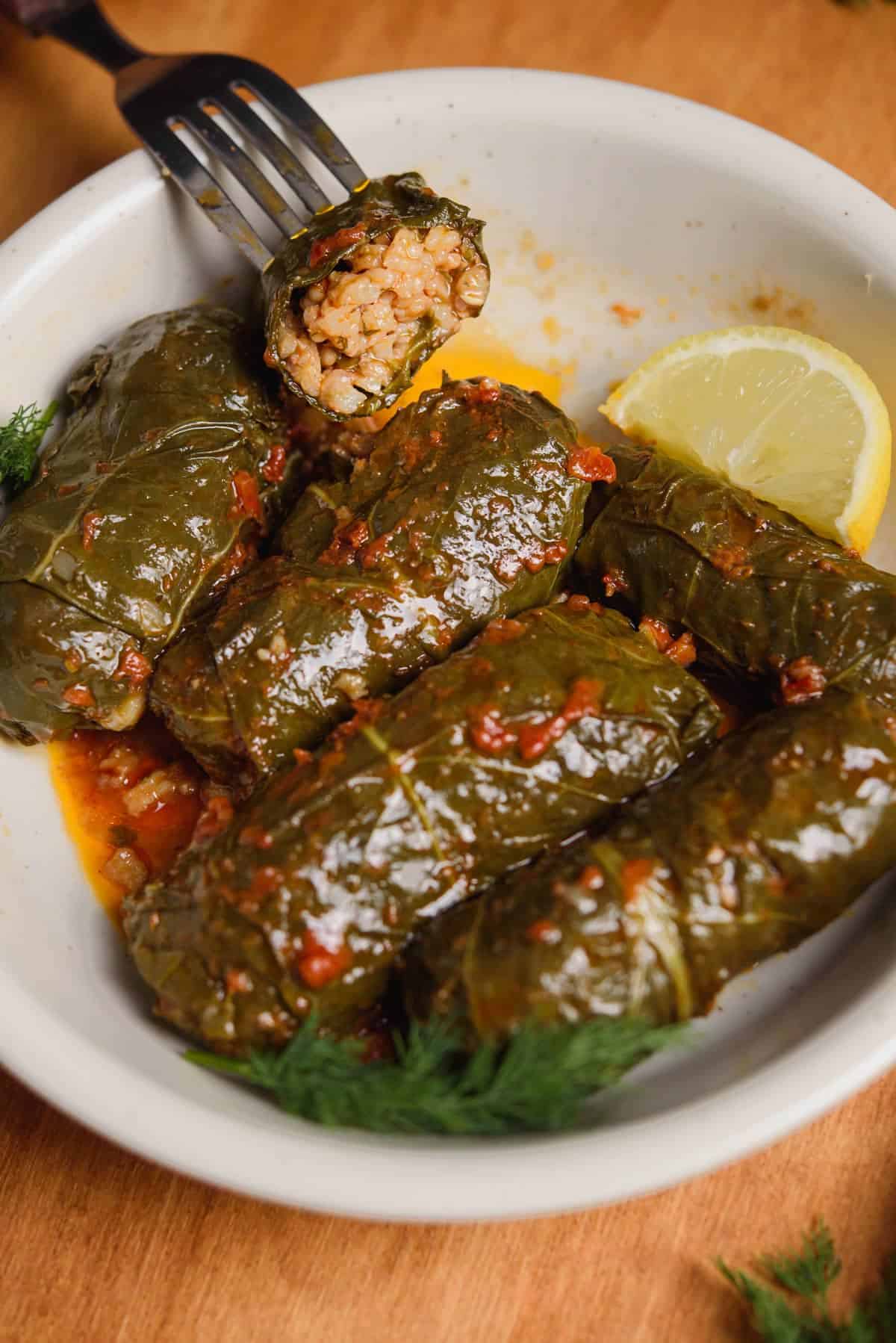
I like to serve these tender and comforting stuffed chard leaves with a squeeze of fresh lemon. Also, some feta cheese on the side and Kalamata olives.
Recipe
Stuffed Chard Rolls
Ingredients
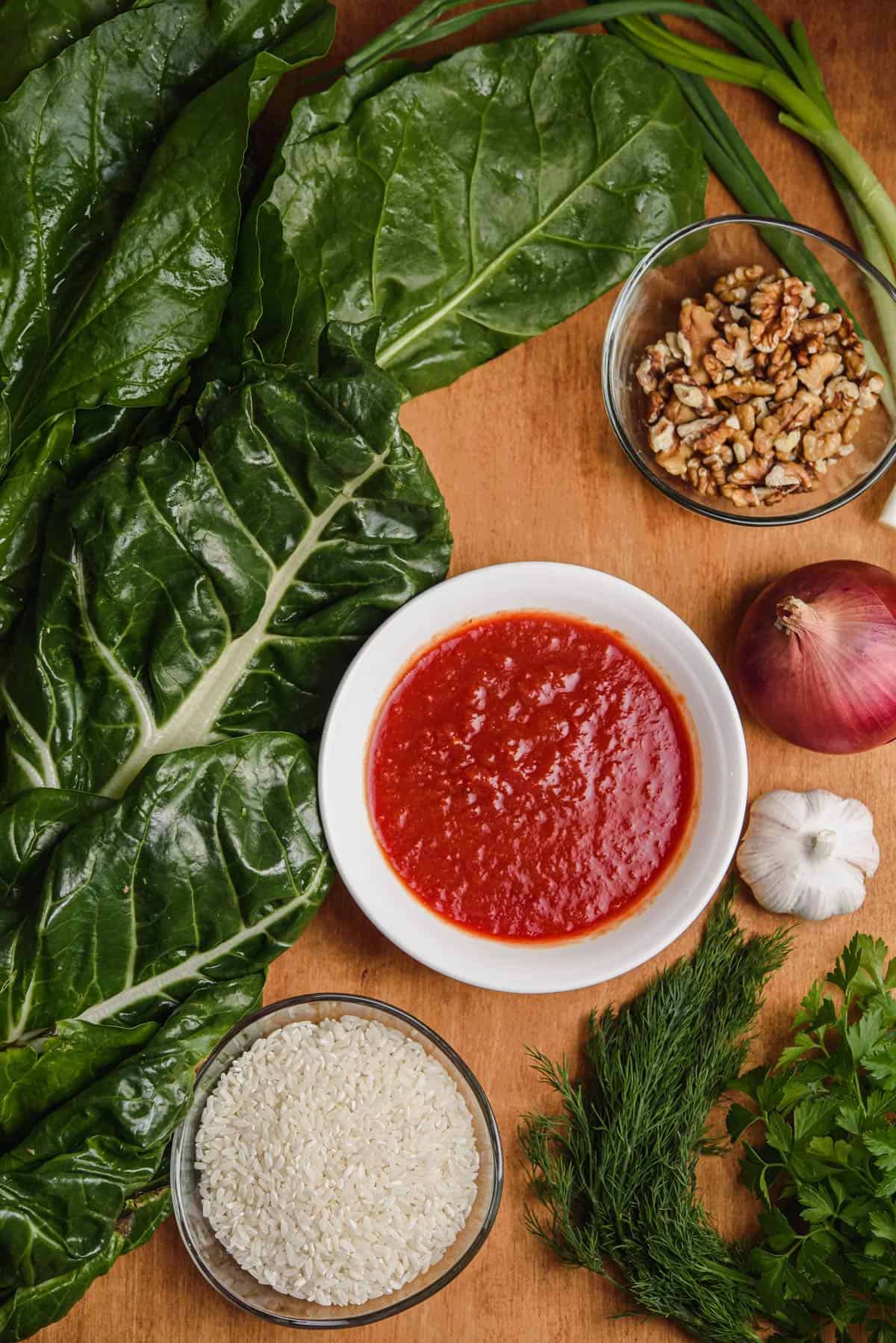
- 20-24 large chard leaves stems removed, (save the smaller leaves to lay in the bottom of the pot)
- 170 grams (1 medium-large) onion minced
- 2 large garlic cloves minced
- 3 small Spring onions minced
- 190 grams (1 cup) short-grain white rice rinsed
- 1 teaspoon sweet paprika
- 70 grams (⅓ cup) finely ground walnuts
- 2-3 tablespoons fresh dill minced or 1 tablespoon minced spearmint
- 2-3 tablespoons fresh parsley minced
- 180 grams (¾ cup) canned crushed tomatoes or 1½ cup fresh, extra ripe summer tomatoes grated
- 125 ml (½ cup) extra virgin olive oil + an extra splash for sauteing and to serve with
- 500 ml (2 cups) hot water or vegetable stock
- kosher salt
- Optional: fresh lemon to serve with
Instructions
Prepare The Leaves:
- Blanch the leaves. Fill a large cooking pot with water and bring to a boil. Add the leaves (4-5 at a time) and cook them for 1-2 minutes, depending on their size. They should soften, but not too much; they need to hold their shape so you can roll them afterwards. Transfer the chard leaves to a large bowl with ice-cold water to cool. Then lay them as flat as possible in a strainer.NOTE: Cook the large leaves separately from the smaller leaves so you don't overcook the latter.
Prepare The Filling:
- Heat a splash of olive oil in a non-stick pan.
- Sauté the onion over moderate heat for a couple of minutes, with a sprinkle of salt, until soft and translucent.
- Add the spring onions and garlic. Cook for 2 minutes more.
- Add the rice, cook and stir for 2 minutes.
- Stir in the paprika and pour in 2 cups of hot water (if using stock, add it to the sauce in step 17). Season with kosher salt and ground pepper.
- Simmer over low heat until the rice absorbs all of the water.
- Stir in the fresh herbs and ground walnuts.
Assemble:
- Lay a chard leaf flat on a cutting board or working surface. The smooth side of the leaf should be facing down.
- Cut and remove the toughest part of the stem at the base of the leaf. Then bring the two ends of the leaf together, covering the gap you just created.
- Add a spoonful of the filling to the bottom of the leaf right at the center.
- Roll. Overlap the bottom end over the filling and fold both sides on top (envelope-like), then roll upwards until you reach the top end of the leaf. Roll tightly but without squeezing it too much. Repeat the process for the remaining leaves. If a leaf is too large, you may cut it in half to create two rolls.
- Prepare the cooking pot. Lay the smaller, uncooked chard leaves at the bottom of a medium-sized cooking pot (not a narrow pot).
- Place the chard rolls in the pot tightly close together so they won't unroll while they cook.
- Pour in the crushed tomatoes (or fresh, grated tomatoes) and the olive oil.
- Place a plate on top of the rolls to hold them down while they cook.
- Pour in 2 cups of hot water (or vegetable stock).
- Simmer over medium-low heat, partly covered, for about 40 minutes. The plate pressing down the chard rolls will make the sauce look like more than it is. So keep that in mind. We want the rolls to absorb the water, leaving mostly oil in the pot. To check on this, you can take the pot off the heat for a minute and remove the plate carefully to see how much sauce is actually left in the pot.
- Let the rolls sit in the cooking pot for 10-15 minutes off the heat.
- Serve with fresh lemon squeezed on top and an extra drizzle of extra virgin olive oil if you like!
Leave a Reply