
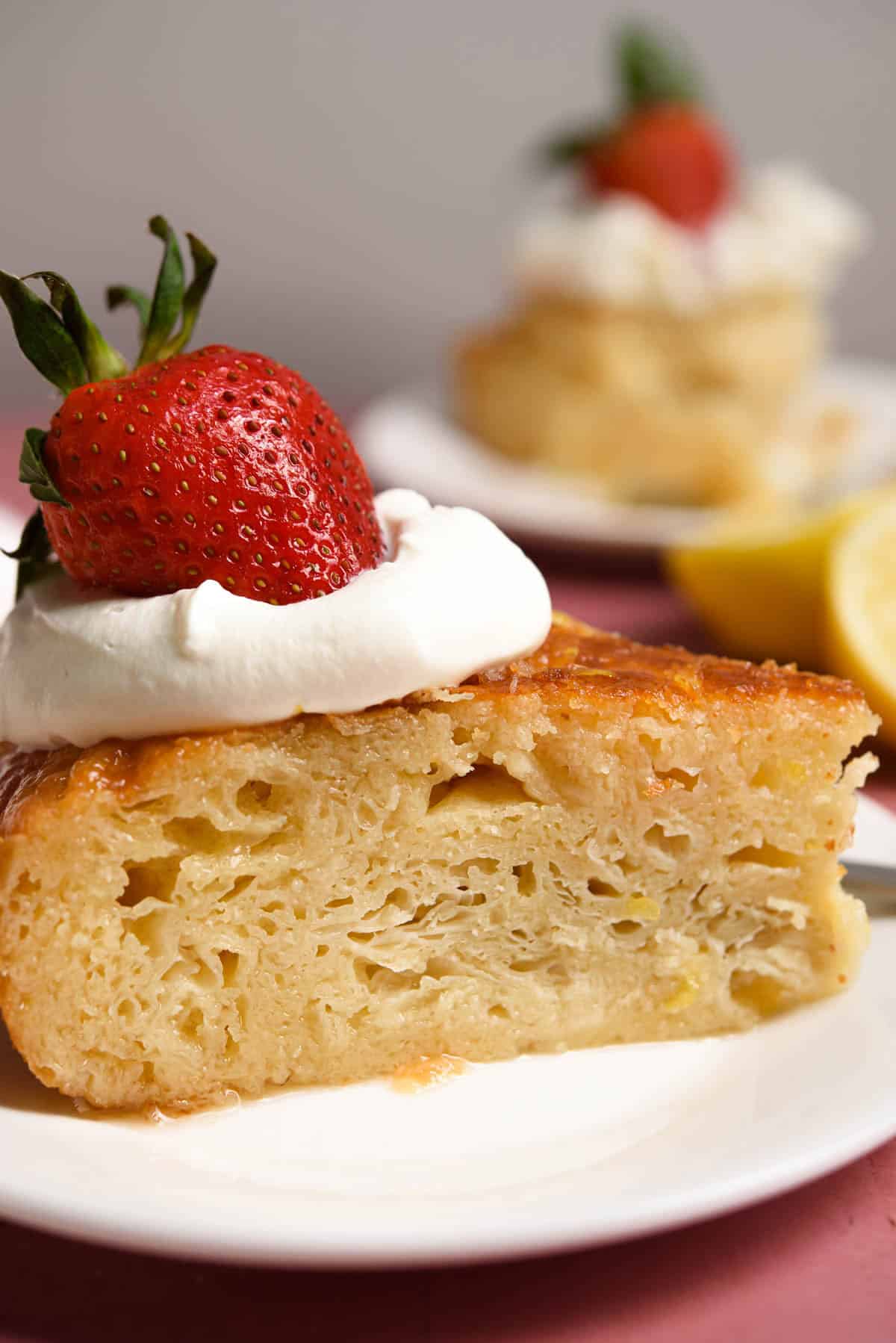
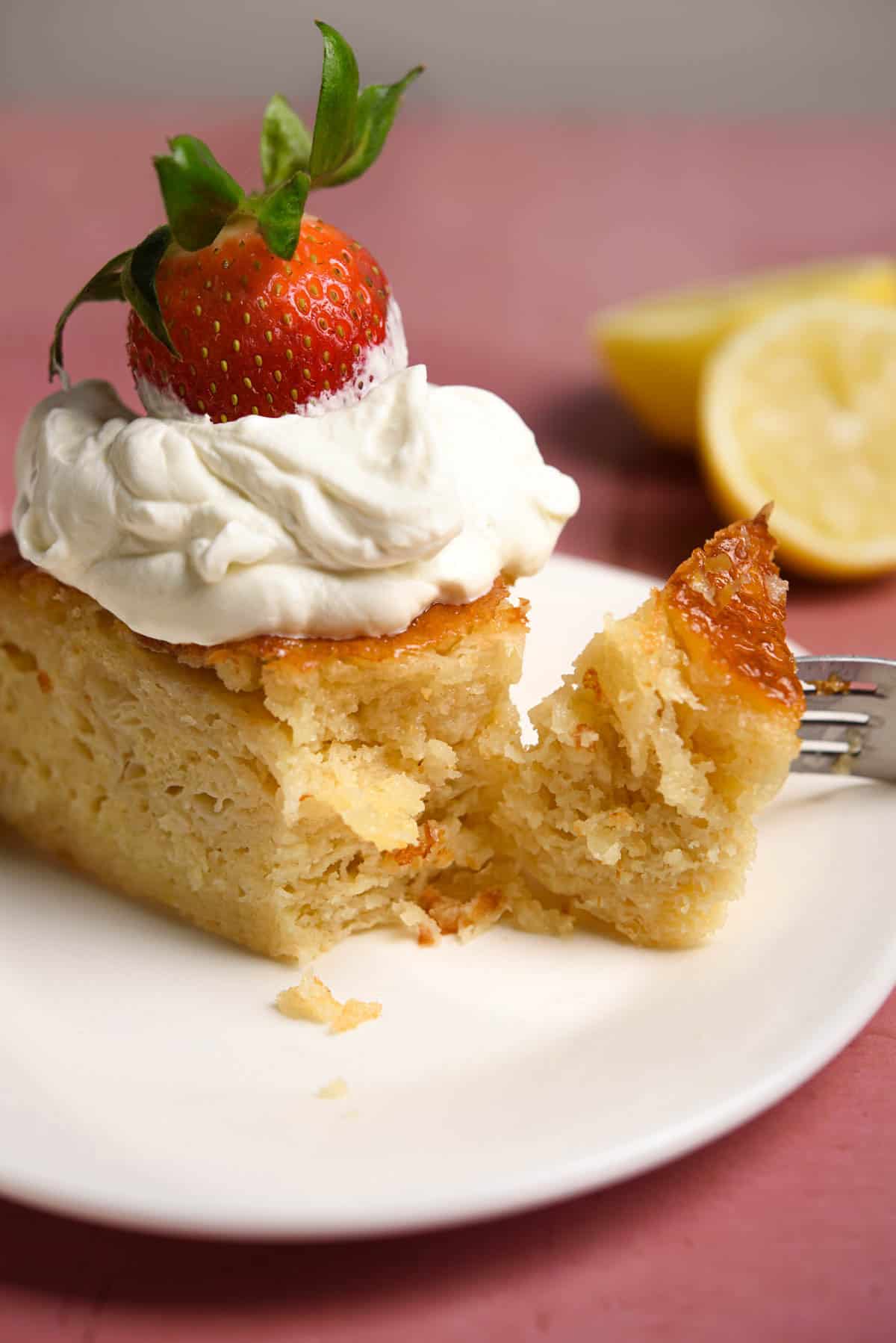
What makes this Honey Lemon cake stand out is its unique texture. It’s soft, slightly spongy, and beautifully moist, almost sticky in the best possible way. Each bite is infused with bright lemon flavor and finished with a fragrant honey syrup that soaks into every layer. And the best part? It’s surprisingly simple to make. No mixer required.
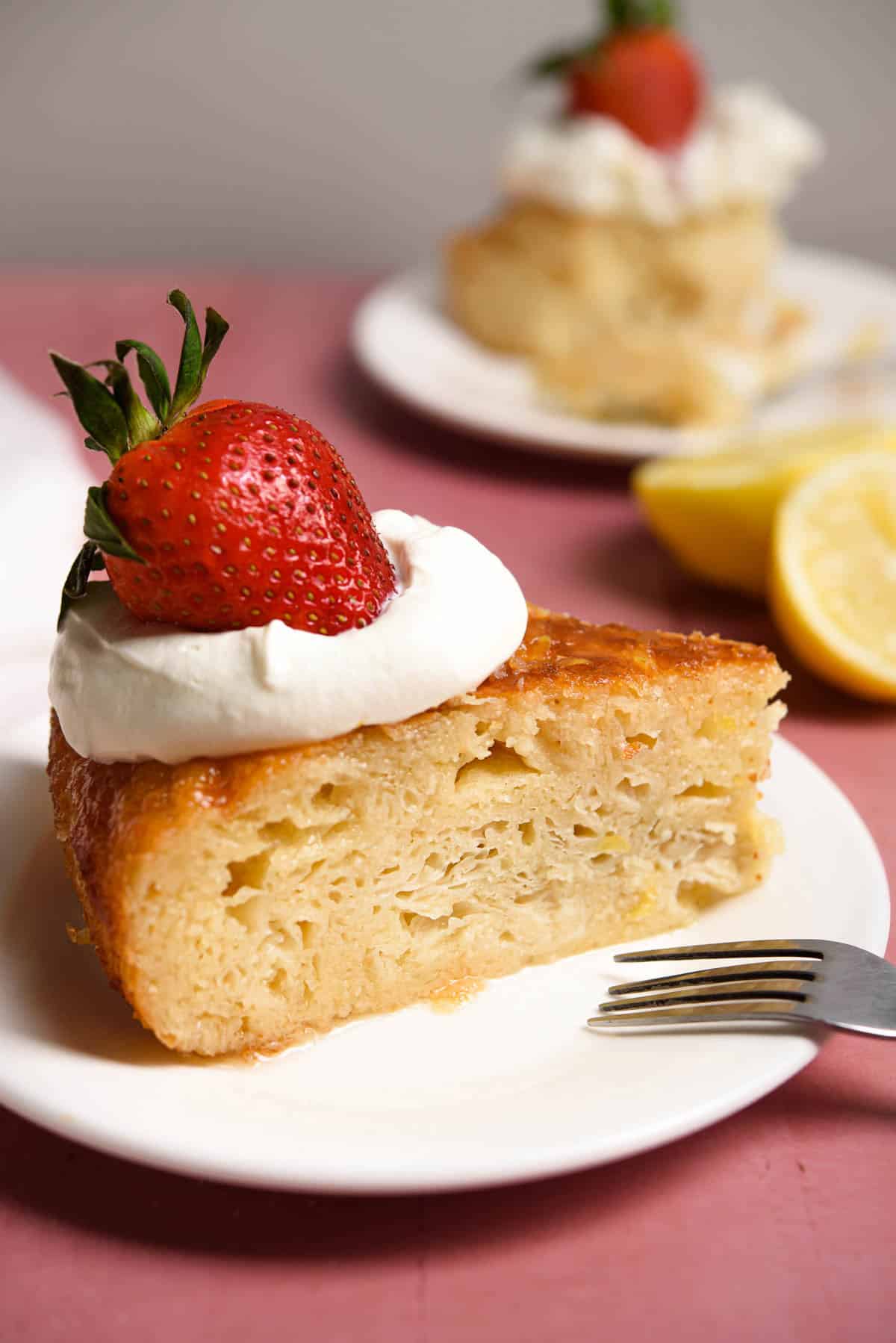
This Greek lemon-honey filo cake is a bright and refreshing twist on the classic syrupy Portokalopita. This version is made with lemons instead of oranges, giving it a more vibrant, slightly tangy flavor that perfectly balances the sweetness of the syrup.
Table Of Contents
Why This Lemon Honey Cake Works
- No electric mixer required
- Intensely lemony with natural citrus aroma
- Soaked in a rich honey syrup with lemon juice & zest
- Soft, custardy texture, moist and almost sticky
The Secret to the Perfect Texture
The key to this recipe lies in how we handle the phyllo pastry.
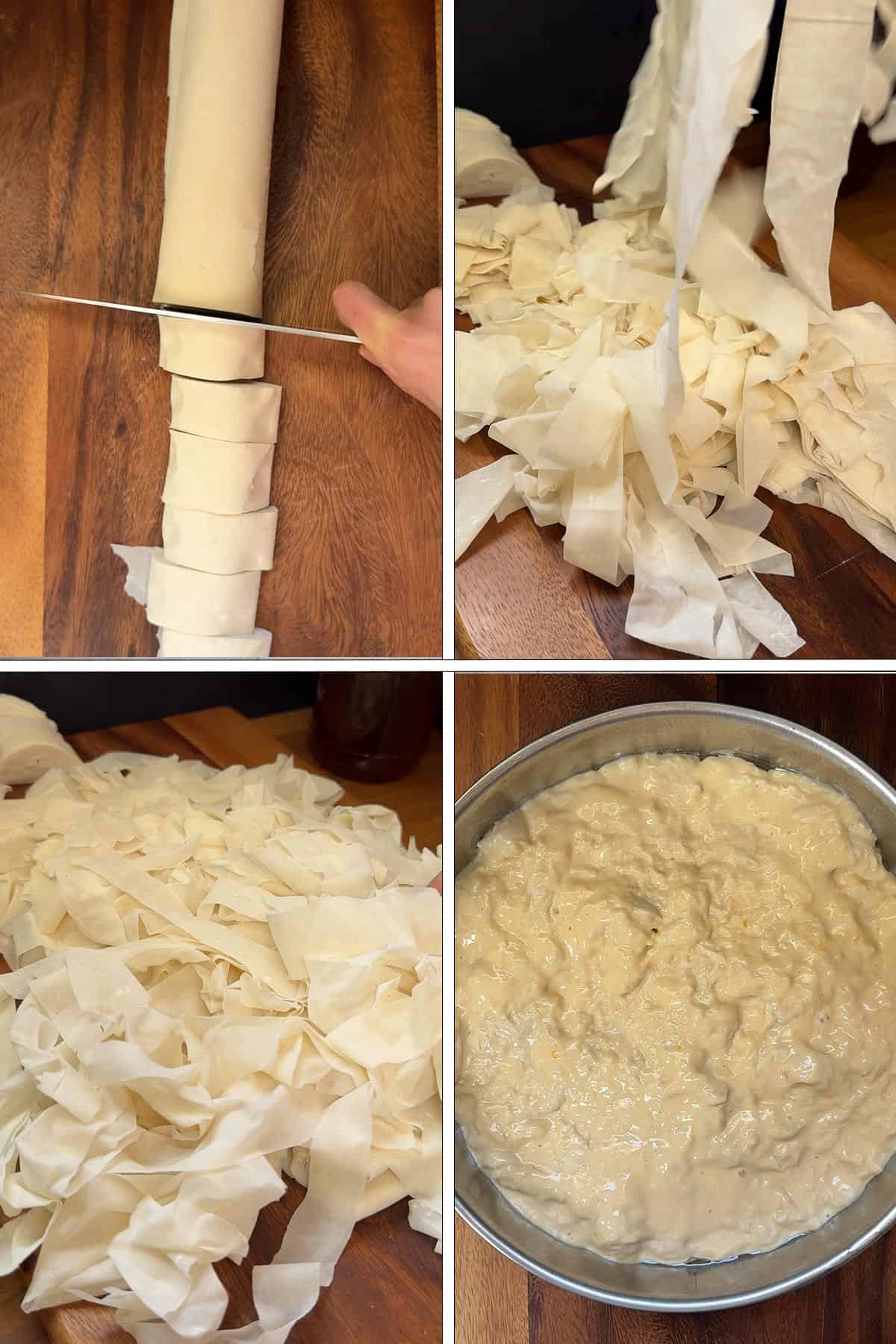
Instead of layering it, we cut the roll into thick strips, unravel them, and allow them to air dry. This step ensures that the phyllo absorbs the custard mixture evenly, giving the cake its signature soft and slightly sticky texture.
It’s what makes this dessert so unique—somewhere between a cake and a syrupy pudding.
How To Make
1. Dry the phyllo
Cut the phyllo into thick strips and gently separate them with your hands. Spread them out on a large sheet pan and let them air-dry for at least 1 hour. This is essential for achieving the right texture.
2. Prepare the honey lemon syrup
In a saucepan, combine water, sugar, honey, lemon juice, and lemon zest. Bring to a boil for a few minutes until slightly thickened.
3. Make the batter
In a large bowl, whisk together: eggs, sugar, yogurt, vegetable oil (sunflower or corn oil), lemon zest, baking powder, baking soda, and vanilla extract. Whisk until smooth and creamy. No mixer needed, just a simple whisk does the job.
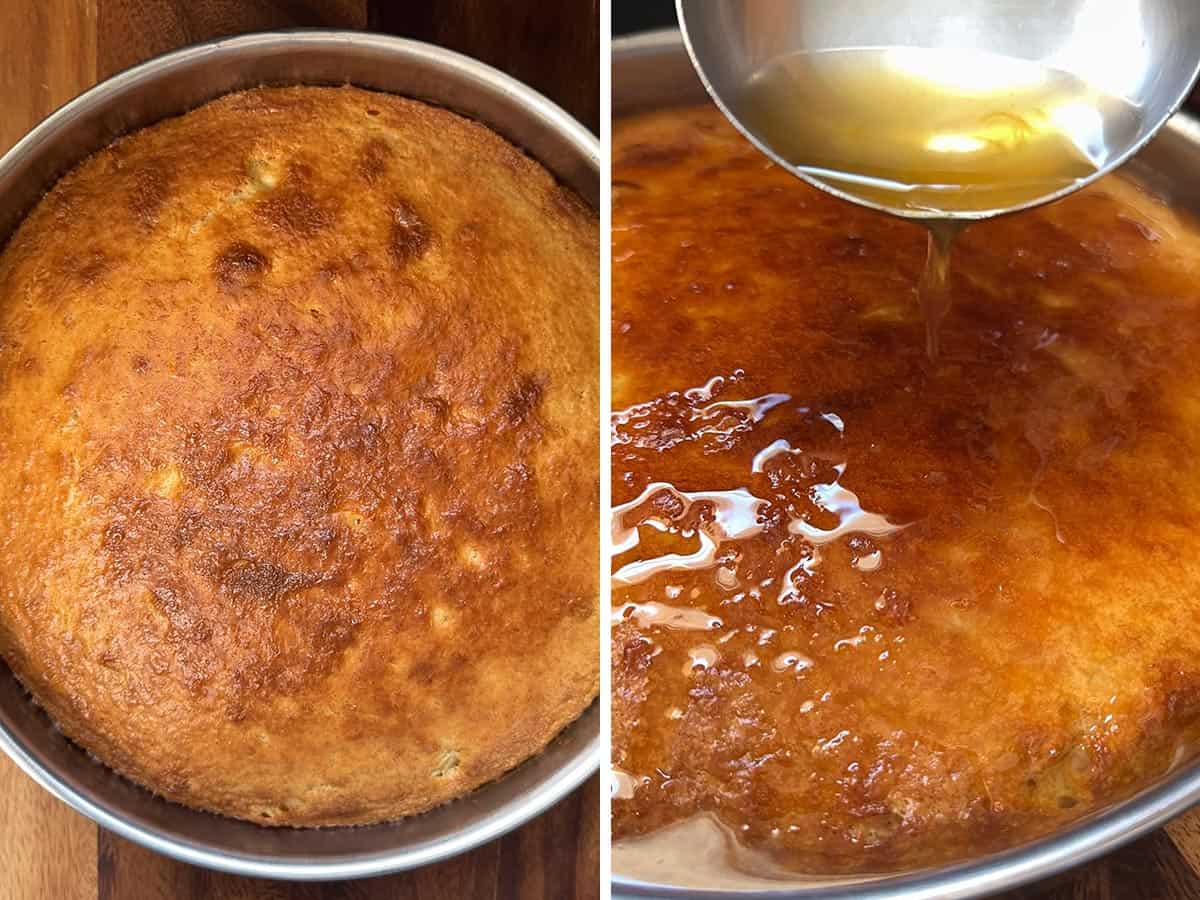
Add the filo in batches. Then transfer the mixture to a greased pan and bake until honey-brown on top.
4. Add the syrup
Ladle the syrup gradually over the hot cake and let it stand at room temperature for a couple of hours until fully absorbed.
TIPS
- Cut and separate the filo as much as you can. Lumpy filo doesn't cook properly.
- For a thicker, cakey texture, you air-dry the filo in the oven like it's done in Portokalopita. You can even bake it for longer than the recipe states, until the filo gets some color. This will add a toasted flavor to the cake, other than the creamy buttery taste that non-baked filo gives.
- Add the filo in batches to the cake batter. Break it apart so it won't lump.
- Avoid using a Sprinform pan for this cake. The syrup is plenty and takes time to be absorbed by the cake.
- Let the cake cool to room temperature before refrigerating.
Pan Size
To make this Greek lemon cake with syrup, I am using a round 10-inch (26 cm) pan. Alternatively, you can use a square pan measuring 9 x 9 or 10 x 10 inches.
Serve With
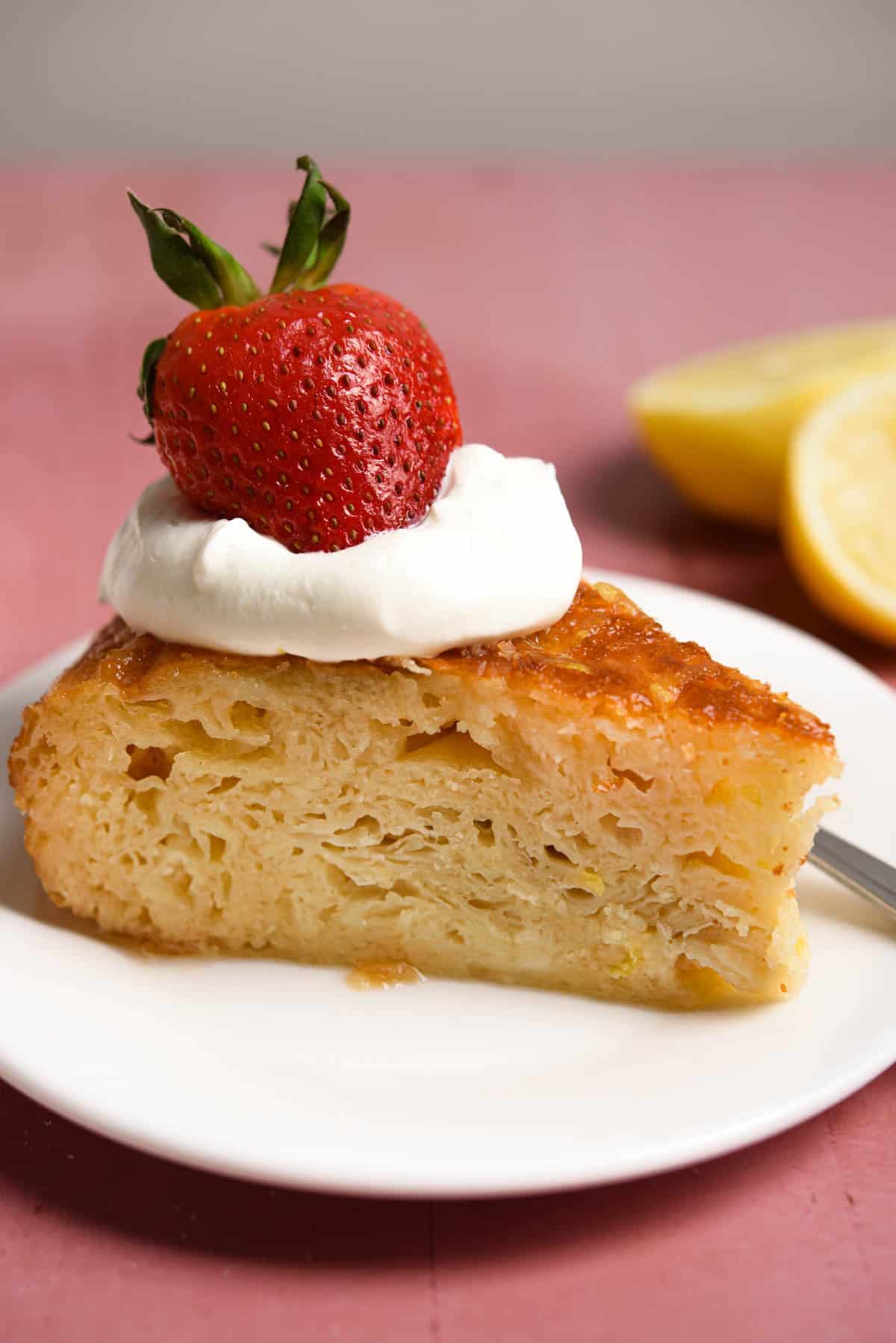
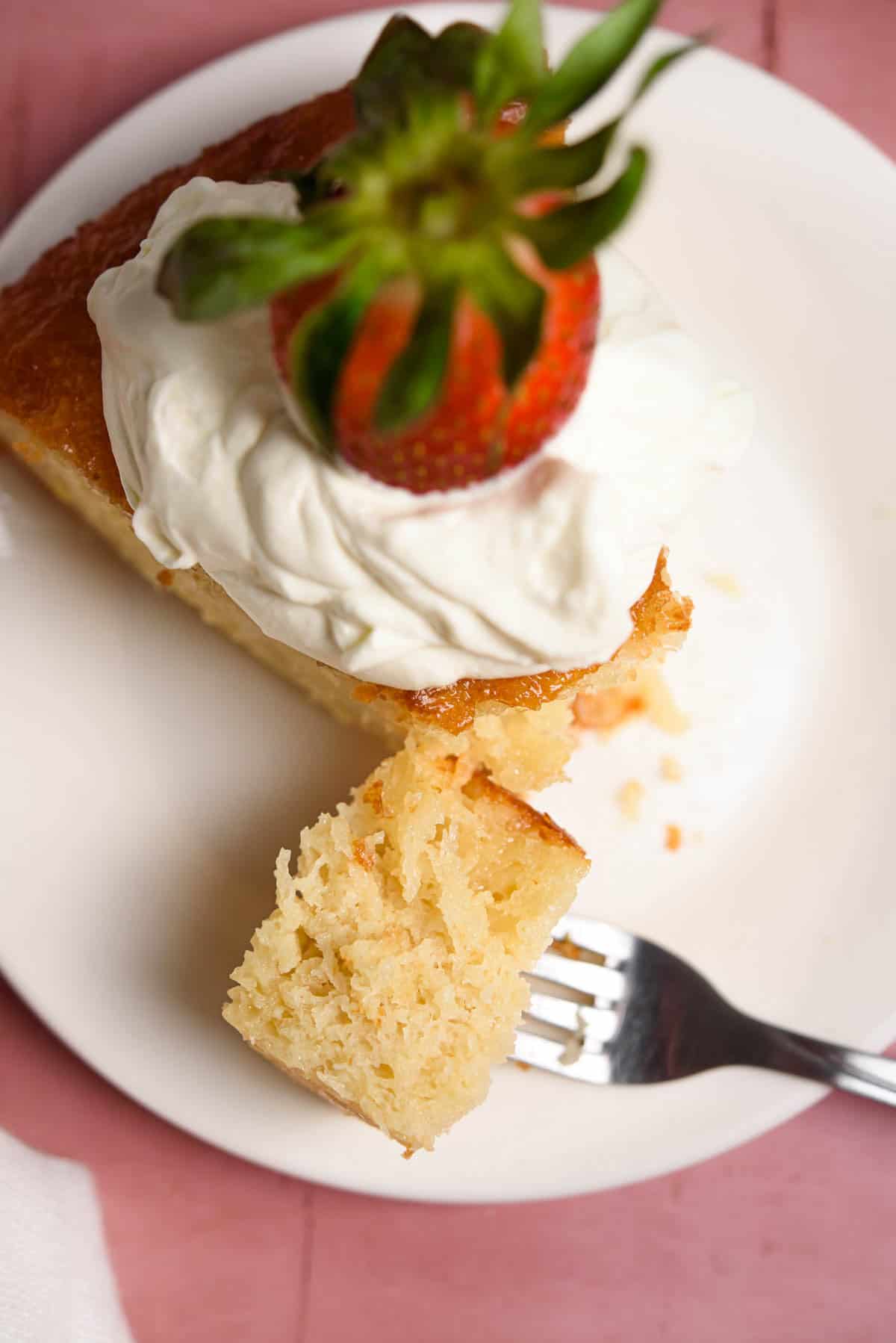
Serve this moist honey lemon yogurt cake with a scoop of Greek yogurt and a drizzle of honey on top. Or with a spoonful of homemade whipped cream and fresh strawberries. You can even sprinkle it with toasted ground almonds for a nutty flavor kick. Or serve it plainly as is. It's pretty refreshing, especially after a meal!
Recipe

Honey Lemon Cake (with filo and yogurt)
Ingredients
For The Lemon Cake:
- 1 package (450 gram) filo pastry thaw in the fridge overnight
- 4 large eggs
- 300 grams (1¼ cups) Greek yogurt full-fat
- 100 grams (½ cup) sugar
- 200 ml sunflower or corn oil
- 1 lemon zested
- 4 teaspoons baking powder
- 1 teaspoon vanilla extract
- ½ teaspoon baking soda
For The Syrup:
- 250 grams (¾ cup) honey
- 150 grams (¾ cup) sugar
- 150 ml fresh lemon juice
- 250 ml (1 cup) water
- 2 lemons zested
Instructions
- Prepare the filo. Cut the filo into thick strips. Toss and separate them. Spread them fluffily onto a large sheet pan. Leave them to air-dry for at least an hour at room temperature.
- Make The Syrup. Add all of the ingredients for the syrup (honey, sugar, water, lemon juice, and zest) to a saucepan and bring to a boil. Cook for 5-6 minutes until slightly thickened. Set aside.
- Preheat oven to 170°C / 340°F.
- Prepare the cake batter. Add the yogurt, vanilla extract, sugar, baking powder, and baking soda to a large mixing bowl and whisk to combine.
- Whisk in the eggs and then the oil.
- Add the filo in batches, stir with a pastry spatula, and break the filo apart as you stir so it won't lump.
- Grease a round 10-inch (26 cm) pan (not a springform pan) with oil.
- Transfer the filo cake batter to the pan and smooth the surface with a spoon.
- Bake for 35-40 minutes until the top is honey-brown and a toothpick inserted in the center of the cake comes out clean. Note: the toothpick might look moist, but shouldn't have fragments on it.
- Ladle the syrup over the hot cake. Poke the cake with a toothpick to help it. The syrup might look like it's a lot, but it will be absorbed. Let the cake stand at room temperature for a couple of hours to absorb the syrup.
- Refrigerate the cake for at least 3-4 hours prior to serving.
- Cut into 12 pieces and serve with a scoop of Greek Yogurt or Whipped Cream on top. Fresh strawberries are also amazing with this cake.


This is such an unusual cake I just had to try it out because I had all the ingredients on hand. From all the times I have made baklava and struggled to keep the filo moist, I didn't expect it to take so long to dry out, I shouldv'e used two cookie sheets I guess. I also saw that the instructions for the cake batter listed sugar, but there was no measurement for sugar in the cake batter ingredient list so I looked up several Portokalopita recipes and ended up using 1/2 cup of sugar for the batter, it turned out great. It does look like alot of syrup, but the finished cake soaked it right up. The finished product was tart, sweet, moist, airy and refreshingly bright on a warm spring day. Thanks for a stellar recipe, I will definately make this again.