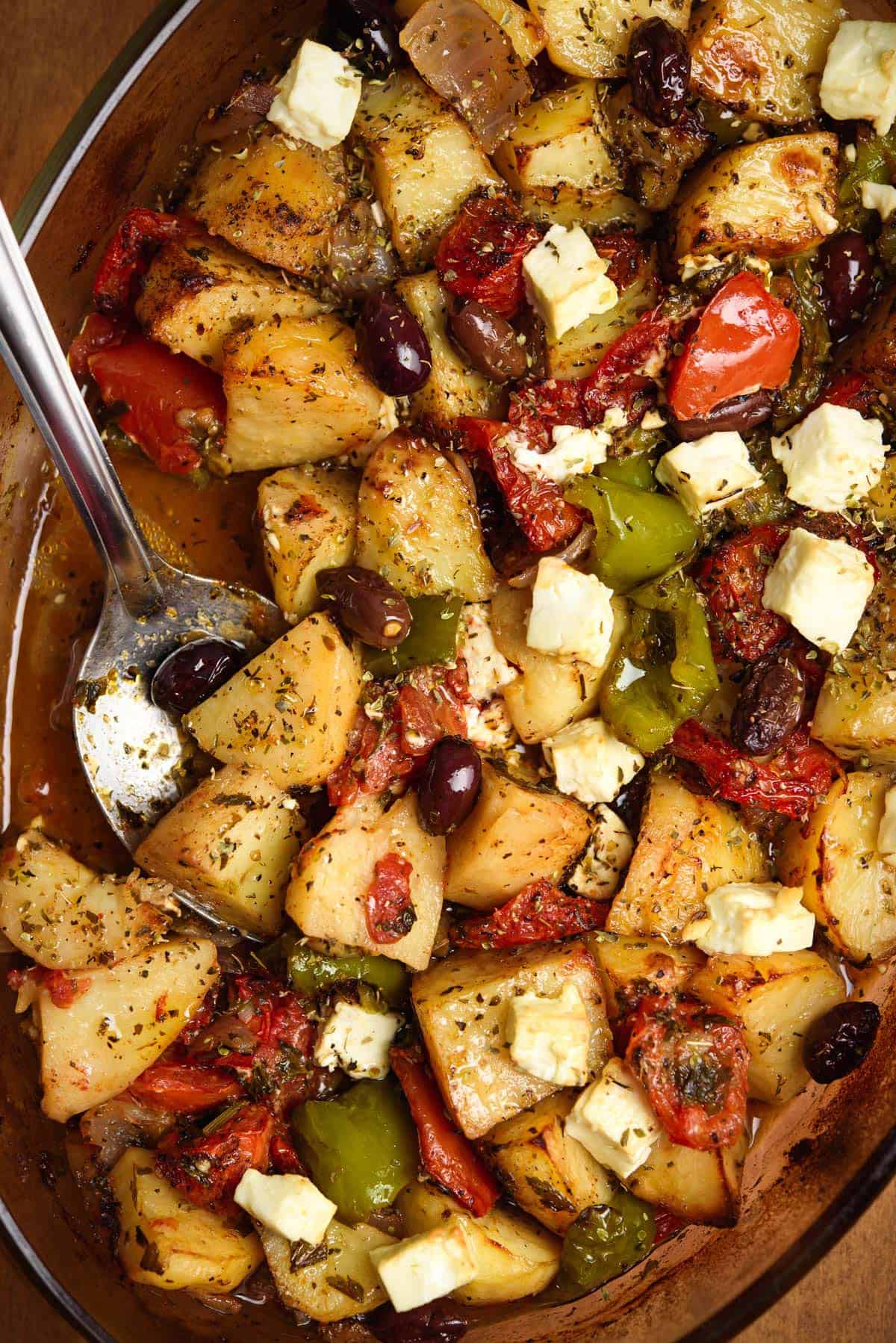
These Greek Baked Potatoes are an easy Casserole dish with Tomatoes, peppers, feta, and kalamata olives. A juicy, rustic Greek oven-baked potato dish where everything melts together beautifully.
Some of the best Greek recipes are not the ones with crisp edges or perfect presentation. They are the ones baked slowly in a deep dish, with plenty of olive oil, ripe vegetables, herbs, and patience. Until everything becomes soft, juicy, fragrant, and deeply comforting. This Greek baked potato casserole is exactly that kind of dish.
To make these delicious Greek baked potatoes, peel and cut the potatoes into chunky cubes. Cut also the vegetables (fresh tomatoes, peppers, onions) the same size. Toss everything into a baking dish together with chunky garlic, parsley, dried oregano, paprika, olive oil, and just a tiny splash of red wine vinegar.
Coat and bake slowly. As they bake, the vegetables release their juices and mingle with the olive oil, creating a rich, savory, naturally silky cooking liquid that the potatoes slowly absorb.
Once the potatoes are soft and tender, uncover and give it a stir. That is where the real magic happens.
The juices from the tomatoes, peppers, onions, and garlic blend into the potatoes, coating every piece with that classic Greek oven-baked flavor. By the end, the potatoes are very soft and tender, the vegetables are sweet and mellow, and the whole dish is juicy and full of Mediterranean flavor.
Then, for a final roast, add diced feta and Kalamata olives, return the baking dish to the oven for a few final minutes until the feta softens slightly and the olives warm through.
Why They're So Good
What makes this dish special is its texture.
Instead of roasting the potatoes until crisp, we bake them slowly in a baking dish so they can soften in the juices of ripe tomatoes, the sweetness of onions, peppers, and the mellow flavor of roasted garlic.
The result is something like Greek oven potatoes, a vegetable casserole, and a rustic lathero-style baked dish.
And once you stir the dish halfway through baking, all the juices come together into one beautiful, rich, aromatic base that clings to the potatoes and turns the whole casserole into something very juicy and flavorful.
Tips for the Best Juicy Greek Potatoes
Use a deep baking dish. A casserole dish is much better than a flat tray here. It keeps the vegetables and juices together and allows the potatoes to cook gently in all that flavor.
Don’t cut the garlic too small. Keep it in chunks, not minced. Large pieces roast slowly, becoming sweet and mellow.
Don’t skip the stir. This is the signature step. It blends the vegetable juices and redistributes all the flavor throughout the dish.
This should stay juicy. If it starts looking dry while baking, your oven may run hot. Add a splash of water.
Frequently Asked Questions
Q: Can I make this Greek potato casserole ahead of time?
A: Yes. In fact, it tastes even better after resting. You can bake it fully, then gently reheat before serving.
Q: Can I add zucchini or eggplant?
A: Yes. Both work beautifully and make the dish even more like a Greek vegetable bake.
Q: Should the potatoes be crispy?
A: No. This recipe is meant to be soft, juicy, and tender, not crispy.
Q: Can I use cherry tomatoes?
A: Yes, but ripe regular tomatoes usually create a more classic casserole-like texture because they break down more fully.
Q: Can I make it vegan?
A: Yes. Simply omit the feta or use a plant-based feta alternative. The olives and olive oil already bring plenty of richness.
Add all the ingredients except the olives and feta to a baking dish. Toss and mix to combine. Pour in 125 ml (½ cup) of water from the side. Cover with aluminum foil.
Bake for about 1 hour until the potatoes are soft.
Raise the temperature to 200°C / 390°F.
Uncover and roast for 15 minutes.
Stir the potatoes, then toss the feta and olives on top.
Roast for a final 15 minutes.
Rest for 20 minutes inside the oven before serving.





The flavour…. Devine!!! 😍